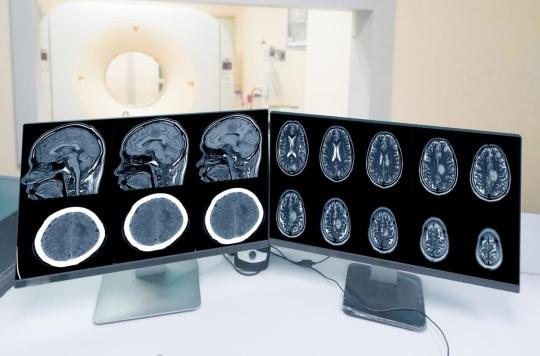
The Androcur is well linked to an increased risk of meningioma
A study by the University of Bristol provides additional evidence that cyproterone acetate (CPA), marketed in France under the name Androcur, is well linked to an increased risk of benign brain tumor called meningioma.
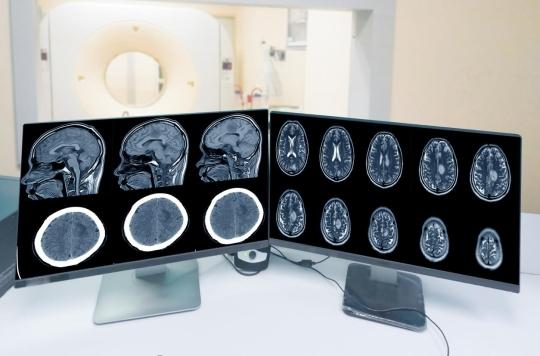 Tonport Kasa/Istock
-
- Posted on 08.02.2022 at 10:30 am
- Containing an active ingredient called cyproterone acetate, Androcur and its generics are prescribed to women with hirsutism, acne, endometriosis or as contraception. Men with advanced prostate cancer can also be prescribed.
- In France, the Medicines Agency has set up a toll -free number (0 805 04 01 10) accessible from Monday to Friday from 9 a.m. to 7 p.m. ”to answer questions from patients on Androcur.
Cyproterone acetate (CPA) is responsible for increasing the risk of meningioma, a generally benign brain tumor but which can strongly impact quality of life by causing a handicap linked to a brain compression in particular.
C’est la conclusion d’une nouvelle étude publiée dans Scientific Reports vendredi 4 février. Menée par des chercheurs de l’université de Bristol, en Angleterre, elle confirme les résultats d’autres travaux, notamment une étude de l’Assurance-maladie datant de 2018, et suspectait l’Androcur de multiplier jusqu’à 20 (après 5 années de traitement), et même plus, la probabilité de méningiomes chez les femmes traitées longtemps et à hautes doses.
Meningiomas when the drug is used in high doses
Marketed since the 1980s by Bayer laboratories, the Androcur is a progestogy prescribed for years for women with hirsutism, that is to say an extreme development of hair, but also against acne, endometriosis or as contraception. Belonging to the class of steroidal antiandrogens and containing an active ingredient called Cyproterone acetate, Androcur is also used in men to treat prostate cancer at an advanced level.
In these new works, and taking into account the widespread use of cyproterone acetate, the researchers carried out a meta-analysis from four studies relating to a total of 8,132,348 patients. The objective was to assess whether the high -dose use of this drug was associated with the incidence of meningiomas.
The sample included 165,988 patients identified as taking cyproterone acetate at variable doses. Using this data, the team analyzed the appearance of meningiomas in patients using high -dose cyproterone acetate compared to those using low doses. A significant association between the use of high doses and an increased risk of meningioma was well found, which was not the case with the low doses.
« La cause des méningiomes est controversée mais il existe des preuves solides suggérant un rôle plausible des hormones sexuelles dans l’apparition des méningiomes, souligne Keng Siang Lee, étudiant en médecine et auteur principal de l’étude. Nous savons qu’il a une prédilection pour les femmes, surtout après la puberté. »
A limitation of the conditions of use in France and in Europe
À la lumière de ces résultats, les chercheurs rappellent que la prescription d’Androcur à forte dose, en particulier pour des indications hors AMM, doit être considérée avec prudence. Ils suggèrent également qu’un « dépistage systématique et la surveillance des méningiomes par IRM cérébrale« soient proposés aux patients à qui l’on prescrit de l’acétate de cyprotérone à des doses élevées et pendant de longues périodes.
C’est le cas en France. Depuis le 1er juillet 2019, tout nouveau patient débutant un traitement avec de l’Androcur ou un de ses génériques est systématiquement informé du risque de tumeur lié à son utilisation prolongée. Début 2020, l’Agence européenne du médicament (EMA) a également émis une série de recommandations pour limiter son utilisation. Désormais, il doit être utilisé uniquement dans les cas d’hirsutisme sévère où les autres traitements ont échoué. Son utilisation est maintenue dans le traitement du cancer de la prostate. En cas d’antécédent de méningiome, l’Androcur ne peut plus être utilisé même à faible dosage.
Pour l’heure, les chercheurs reconnaissent ne pas savoir si « l’acétate de cyprotérone en dessous d’un certain seuil peut être totalement sûr en termes de risque de méningiome » et souhaitent donc poursuivre les recherches cliniques sur le lien entre le médicament et le risque de méningiome intracrânien.