Article très intéressant de la revue #Prescrire sur le #Mediator.
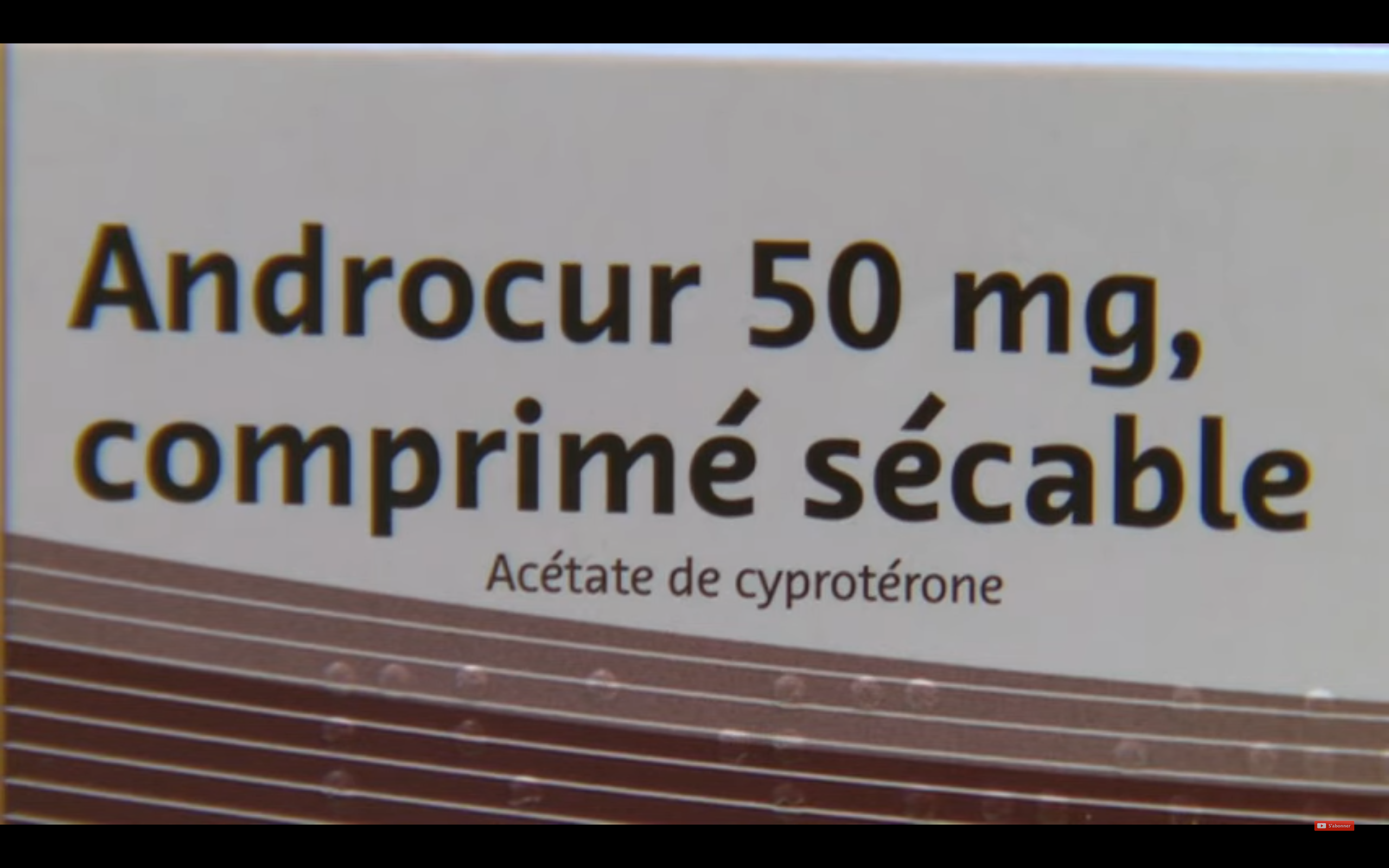
#Androcur (et #Lutéran #Lutényl) #Médiator, mêmes années mêmes conséquences, sur la pharmacovigilance et le rôle de l’Agence dans ces deux dossiers.
Les études épidémiologiques sont là pour ces 3 médicaments, et pourtant de nombreux gynécologues nient encore le risque, malgré les efforts d’Alain Weill, d’EPI-PHARE, et d’Isabelle Yoldjian de l’ANSM Agence nationale de sécurité du médicament et des produits de santé, et bien sûr du Pr Sebastien Froelich.
Que faut-il comme autre preuve pour que les gynécologues écoutent et adaptent leurs pratiques ? (à part ce qui est mis en place par l’ANSM Agence nationale de sécurité du médicament et des produits de santé, qui a appris depuis le Médiator, et même si la pharmacovigilance reste très imparfaite).
Extracts:
Un défaut de curiosité et de distance critique vis-à-vis des données de la firme
Regarding Mediator °, for years, the agency and its experts rested on the only data of the Servier firm, without questioning them or questioning their limits. A posture all the more problematic as the firm has not shared all its knowledge on Mediator °.
Une confiance quasi aveugle dans les données de la firme. Initialement, l’information sur un nouveau médicament est détenue par la firme qui l’a développé. Selon une procureure, la firme Servier aurait dû transmettre à l’Agence tout document en sa possession sur le benfluorex, à tout le moins lors des renouvellements d’AMM (en 1997, 2002, 2007). La firme ne l’a pas fait. Elle a soutenu au procès qu’elle ne devait légalement fournir que les données en lien avec l’indication qu’elle demandait, et qui n’était pas la perte de poids. Mais, comme l’a noté un avocat des victimes, était-il possible pour l’Agence de faire « de la pharmacologie dans le brouillard », c’est-à-dire sans connaître les taux sanguins de norfenfluramine, métabolite commun à Mediator°, Pondéral° (fenfluramine) et Isoméride° (dexfenfluramine), deux autres anorexigènes de la même firme retirés du marché en 1997 en raison de leurs effets indésirables ?
A representative of the CRPV responsible for investigating Mediator ° admitted: “The laboratory told us that there was no similarity [of Mediator ° with isomeride ° and weighting °], we believed the laboratory. She says she supposed that the firm had transmitted all the information, and received this documentation "with confidence". According to the agency's representative at the time of the trial, the firm data was transmitted to the agency by this CRPV without being analyzed. "What failed is a critical analysis within the agency," he admitted. It appeared that the pharmacovigilance survey, presented at trial as mediocre, had only collected notifications. A representative of the CRPV in question admitted it: "We did not investigate scrupulously".
It has not been exhaustive research of documents, even public, on Mediator °, and no bibliography was attached to the CRPV report. However, a study already showed in 1971 that benfluorex was partly metabolized in Norfenfluramine in humans. For his part, in court, Irene Frachon cited copies of scientific publications from the 1970s that prescribed her. An Inspector General of Social Affairs, quoted as a witness, said that documentation existed, even if it was not easily accessible.
Asked about the lack of insight of the drug authorities in France (unlike other countries such as Switzerland) on the anorexigenic amphetamine of Mediator °, Jean-Michel Alexandre retorted that experts of the time could not be "extralucid". Being simply lucid would have been enough to at least wonder about the nature of this substance close to other anorexigens. Months of trial were not enough to dispel the mystery on such a lack of clairvoyance from this pharmacologist unanimously described as brilliant and which said, at the hearing, to be at that time "one of the best". A former vice-president of the AMM commission regretted having been "laxist and incompetent" about Mediator °.
Une fascination pour l’innovation médicamenteuse. Certains experts de l’Agence ont fait montre d’une admiration pour les médicaments et les nouveautés, par exemple : « Il y a tellement de médicaments. Et des beaux médicaments » ; « Les gens viennent [en commission d’AMM] car il y a un nouveau produit, c’est ce qui les intéresse ». De même, justifiant sa trajectoire dite de pantouflage du public vers le privé, un expert a expliqué avoir voulu « passer de l’autre côté » en quittant l’Agence, pour à son tour développer des médicaments plutôt que de les évaluer. Cet attrait pour la nouveauté ne s’est-il pas exercé au détriment d’une vigilance sur les risques ?
A lack of global reflection on the drug
To withdraw mediator ° from the market earlier, it would have been necessary, according to expressions used during the trial, to "bring together" between various information, "reconstruct the file", or even to collect "all the parts" of the "puzzle", among which: in pharmacovigilance, notifications of undesirable effects certainly in appearance rare but serious; In pharmacology, the foreseeable nature of the effects of benfluorex because of its proximity to the fenfluramine (ex-lard) and dexfenfluramine (ex-isomeride °), of the same Servier firm. A puzzle not so complicated, in fact, whose resolution would have made it possible to exercise the precautionary principle, due to the suspicion of dangerousness alone; The benefit of this drug for the patient being ill -established in his indications, why make him run the slightest risk?
Des cloisonnements institutionnels et entre domaines d’expertise. À l’Agence, la Commission d’AMM, en charge d’analyser les bénéfices des médicaments, primait sur la Commission nationale de pharmacovigilance, qui en étudiait les risques. Dans les années 1990, les réunions communes aux membres de ces deux commissions n’étaient pas dans la culture de l’Agence. Certains acteurs ont relativisé ce cloisonnement, telle une ancienne cheffe du Département de pharmacovigilance, qui a toutefois précisé : « Il a pu arriver qu’on n’ait pas tous les éléments groupés. » Une fois la synthèse faite, il revenait au directeur général de prendre une éventuelle décision.
This partitioning, in certain cases exacerbated until rivalry, also existed between areas of expertise: pharmacology, toxicology, pharmacokinetics, clinic, epidemiology, etc. One of the experts, asking about the pharmacological properties of Mediator °, said: "Toxicity manifests itself clinically on the cardiac valvular system, and I, sorry, I am not a doctor, I do not know how to diagnose a HTAP, I work on cell cultures". Another expert indicated that he was not a pharmacologist and could therefore not know the chemical kinship of Mediator ° with isomeride ° and weighting °.
A social security lawyer noted that, to recognize the toxicity of a drug, the firm awaited formal evidence of the mechanism leading to undesirable effects, while epidemiological signals could already be taken into account. According to the analysis of a prosecutor, the agency has shown a narrow conception of pharmacovigilance, based almost exclusively on notifications of adverse effects, with the obsession of the "pure case" and the dogma of absolute proof. A global and transversal vision of the drug was lacking.
A representative of the agency recognized a lack of "medical sense, that is to say turned towards the patient".
Des signaux de pharmacovigilance considérés à tort comme rassurants. La sous-notification habituelle des effets indésirables des médicaments par les professionnels de santé a sans doute été accentuée dans le cas de Mediator°. En effet, les risques de valvulopathie et d’HTAP, même quand ils ont commencé à être connus, n’ont pas été rendus publics dans le résumé des caractéristiques (RCP), pas plus que la parenté chimique du benfluorex avec d’autres anorexigènes. Cette absence d’information n’a pas aidé à faire le lien entre une valvulopathie ou une HTAP, relativement rares et pouvant pour la seconde se manifester des années après le traitement, et la prise de Mediator°. À l’époque, cette prise était considérée par nombre de soignants et de patients comme inoffensive, voire banale.
On the material level, anecdotally but revealing, for the notification of the Valvulopathy case spotted by Georges Chiche in 1999, the computer software used by the Marseille CRPV did not include the title "Aortic insufficiency". This case was then seized by the CRPV as "mitral insufficiency" in its title. However, as the cardiologist explained to the hearing, a mitral insufficiency could be attached to a heart attack that the patient had, which could "clear" a possible link with Mediator °.
According to several testimonies, when, despite these obstacles, undesirable effects were notified, the functioning of the pharmacovigilance system consisted more in excluding cases than to retain them. Doubt benefited from the protection of the firm and its medication and not that of patients. The trial made it possible to publicly raise various questions: from how many notifications of undesirable effects of the same drug should be worried, to consider the facts as a signal to evaluate, and to launch an epidemiological study? Do you need a minimum number of notifications? How to put these side effects in perspective with the expected benefits? Shouldn't we consider notifications of adverse effects the complaints of patients before a civil jurisdiction?
Le raisonnement pharmacologique par analogie ignoré à tort. Le benfluorex présentant une parenté chimique avec la fenfluramine et la dexfenfluramine, un raisonnement pharmacologique aurait dû susciter une alerte. Jusqu’à preuve du contraire, il est prudent de considérer qu’un nouveau médicament expose, a priori, au moins aux effets indésirables des médicaments du même groupe pharmacologique. Les autorités suisses, par exemple, avaient suivi ce raisonnement dès 1996, et elles avaient interrogé la firme sur ce point. En 1998, celle-ci avait préféré renoncer à demander une autorisation dans ce pays pour sa spécialité à base de benfluorex.
According to the representative of the French agency at the trial, this reasoning by analogy could have been carried out in France in 1999, due to the data then sent by the firm to the agency. Similarly, the suffix -orex, specific to anorexigens, and retained by the World Health Organization (WHO) for the International Common Name (DCI) Benfluorex when it was created in 1971, "could have made its ear", according to a pharmacologist. But at the time, substances were rather designated, in particular by health professionals, under their trade name than under their DCI. It should be noted that the firm sought, without achieving it, to have the suffix --orex to the WHO in 1973. And, as a prosecutor pointed out, it "positioned" benfluorex in diabetes more than as an appetite suppressant.
Several experts had relatively early the proximity of Mediator ° with other amphetamine anorexigens. But "we were not used to thinking by family," said one of them. "We have attached a lot to his indications and not to his pharmacology," said a former head of the agency's pharmacovigilance department. According to another witness, a former head of the agency's pharmacovigilance, it seemed that the metabolisms of Norfenfluramine and Benfluorex were different. Even more confusedly, an former external expert, also a consultant for the firm, distinguished the medication Mediator °, "who has a MA, a dosage, a formulation, a mode of administration" of the "Benfluorex active principle".
The firm, it claimed to the hearing that a reasoning by pharmacological analogy was "not scientific". A note released in 1999 by the old number 2 of the firm, Jean-Philippe Seta, said: "Mediator ° is radically distinguished from fenfluramines both in terms of chemical structure and metabolic pathways and efficiency profile and tolerance". "This is the truth from Servier," said his lawyer at the trial. According to the defense, it was a question of avoiding a misuse of the "anti-diabetic" mediator ° as appetite suppressant, and not of concealing its true anorexigenic nature. A prosecutor has in any case qualified as myth, even mystification, this desire to distinguish Mediator ° of weight and isomeride °, from the same Servier firm.
Article on the site to prescribe here:
https://www.prescri.org/fr/218/1902/61199/0/positiondetails.aspx
Find our other articles here