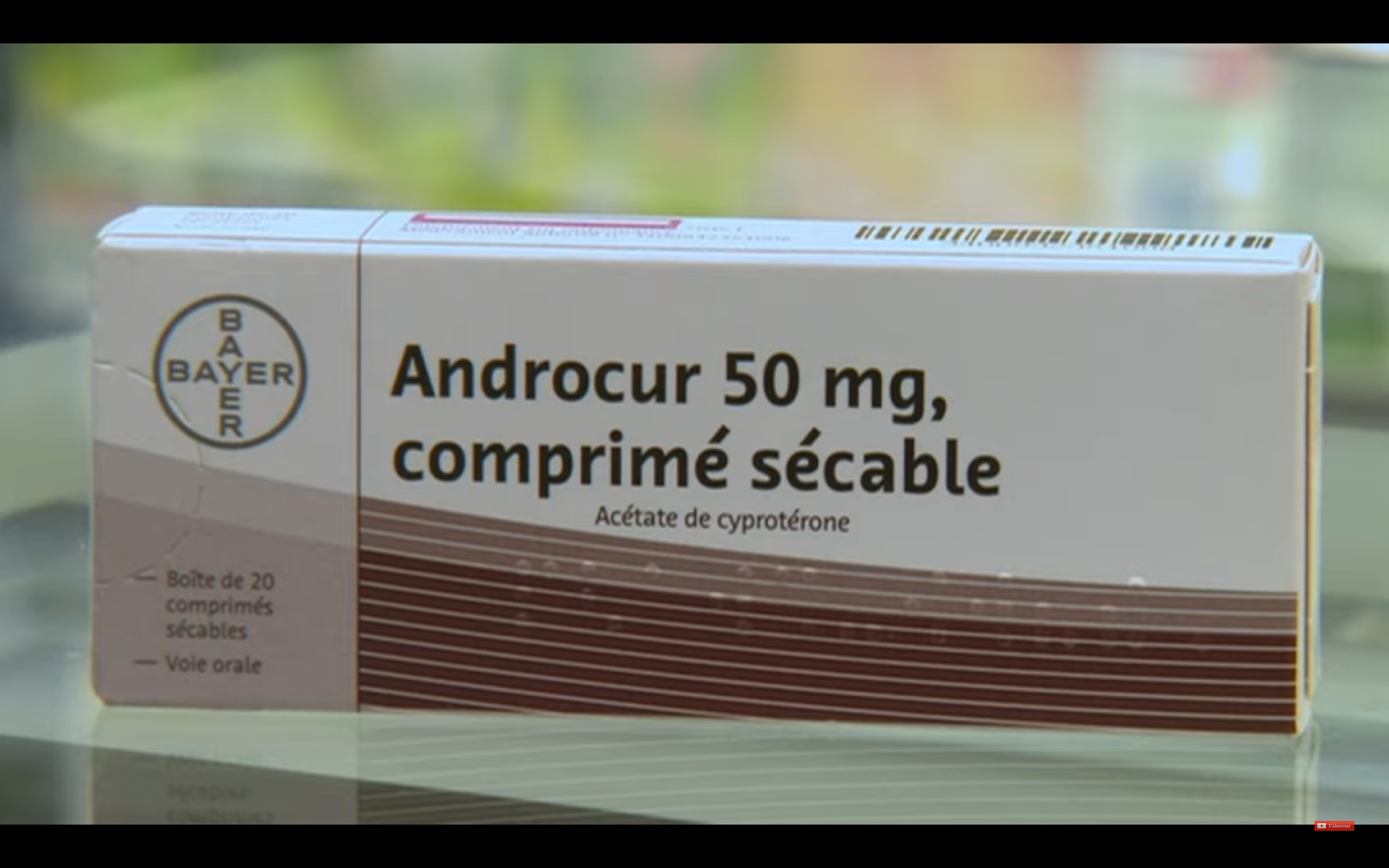
La revue PRESCRIRE, seule revue médicale indépendante a publié dans la partie FORUM, notre lettre au CNGOF, ainsi qu’une contextualisation de la situation à la fin de l’année 2022 .
Ce courrier, envoyé en septembre 2022 , est resté sans réponse à ce jour .
The 2 pages are here
The mail says this:
Bretteville sur Odon, August 29, 2022,
Madam President,
I intervene as president of AMAVEA (Méningiomes Association due to cyproterone acetate, assistance to victims and taking into account other molecules). One of the goals of our association, created in January 2019 and approved by the Ministry of Health on July 8, 2020, is to inform about the risk of developing meningiomas in connection with the taking of synthetic progestin drugs. This risk is demonstrated to this day for three drugs, cyproterone acetate (Androcur®), chlormadinone acetate (Lutéran®) and nomestrol acetate (Lotényl®). The occurrence of intracranial meningioma is a serious and recognized side effect of synthetic synthesis and synthetic estrogens.
Our association participated in the meetings of the temporary specialized scientific committee by the National Agency for the Safety of Medicines from its creation in January 2019 concerning cyproterone acetate (Androcur®). It continues to participate meetings which are currently taking place concerning other drugs likely to cause meningiomas. Our association participated in the reassessment of these treatments in the context of monitoring good practices under the aegis of the High Authority for Health.
You know that these treatments are very commonly prescribed, especially in the context of endometriosis, but also for contraception. Our association receives daily messages from patients who receive erroneous information from certain gynecologists concerning meningiomas and their management.
Here is the erroneous information most often reported by patients:
- « Le dépistage d’un méningiome ne sert à rien » est une information qui nécessite une explication argumentée car les règles de dépistages ont été édictées par les autorités compétentes et sont accessibles aux patientes qui, parfois, ne comprennent pas les décisions prises les concernant.
- « Un méningiome n’est pas une maladie grave », « un méningiome est une tumeur bénigne », « votre méningiome est de petite taille » sont autant d’éléments d’information qui peuvent minimiser la gravité potentielle d’une situation clinique car un méningiome, même bénin (de grade 1) et de petite taille peut engendrer des déficits neurologiques et neurocognitifs définitifs, un méningiome peut être une tumeur atypique (de grade 2), voire une tumeur maligne (de grade 3). Il convient de laisser aux spécialistes des méningiomes de se prononcer sur ces points qui sont d’une importance capitale pour la patiente ; ces discours faussement rassurants n’aident en rien.
- « Le méningiome va disparaître à l’arrêt du traitement X » est une assertion absolument fausse. Un méningiome peut effectivement décroitre après l’arrêt d’un médicament progestatif de synthèse, mais pas dans tous les cas, et de façon imprévisible et dans un délai long. Dans tous les cas, il ne disparait pas. Là encore, il convient de laisser aux spécialistes des méningiomes de se prononcer sur le cours évolutif du méningiome qui vient d’être diagnostiqué.
The result is the care defects, which most often encountered are:
- The absence of addressing towards a meningioma specialist: patients are most often addressed to a neurologist and are sometimes addressed to any specialist because of the "small size" of meningioma. It should be recalled that specialists in the management of meningiomas are the neurosurgeons and that an opinion is required in all cases.
- The management of progestinic drugs: patients completely understand the complexity of having to replace the drug incriminated by another, especially when their treatment is prescribed as part of the AMM for a disabling disease. As such, they may hear that we should take the time of consultation between doctors because they are aware that certain hospitals have organized dedicated meetings. On the other hand, it is not admissible to hear that there is "no solution" in consultation.
- The proposal of the IUD MIRENA®: this IUD, which contains progestin hormones is being evaluated (epidemiological study of Ep-Phare) to find out if it is at increased risk of meningioma. As such, all reservations and precautions must be taken by gynecologists in their prescription and in the information of patients.
It is detrimental for patients not to have, on the part of their gynecologists, reliable and intelligible information and care suitable for current knowledge. Patients may understand without difficulty that their situation requires medical reflection and addressing to a specialist colleague. On the other hand, the erroneous and falsely reassuring speeches are unacceptable and their possible efficiency is made obsolete by the abundance of information available on the Internet.
Our association requests that gynecologists provide factual information adapted to the light of knowledge on the question and requires tact in the speech provided to patients. To get there, perhaps it is necessary to recall the context: that of a tumor induced by a drug that develops in the head of the patient sitting in front of the gynecologist. It is easy to understand that it is not "Benin" to may have to be "open the skull", to be "trepanized", with a risk of neurological sequelae (which is unfortunately possible after this type of surgery). So "benign" is meningioma, such an announcement is always real violence and each patient cashes as she can. Thus, the violence of words or the trivialization of the situation should not be added to what is experienced as a cataclysm by patients.
Le Collège que vous présidez participe à la représentation de la profession auprès des pouvoirs publics et des agences gouvernementales dans les domaines de la Formation Initiale, de la Formation Continue et de l’organisation des soins, en lien avec les autres sociétés savantes et les syndicats de gynécologues et obstétriciens. Ainsi, votre Collège est dans la position idéale pour remédier à cette situation préjudiciable aux patientes, en mettant en œuvre tous les moyens nécessaires pour que l’information dispensée et la prise en charge soient de qualité, pour toutes les patientes et sur tout le territoire. Au passage, nous remercions les gynécologues qui ont su accompagner leurs patientes sans heurt. Pour ce faire, il semble judicieux que le Collège que vous présidez se mette en lien avec les sociétés savantes de neurochirurgie. Le comité scientifique de l’Association AMAVEA est à votre disposition pour vous y aider.
While waiting for a return from you and by staying at your entire disposal to advance in concert, please accept, Madam President, the expression of our respectful greetings.
Madame Emmanuelle HUET-MIGNATON
For information, the AMAVEA Scientific Committee
- Professor Johan Pallud, neurosurgeon, head of neurosurgery service at GHU Paris Psychiatry & Neuroscience, University Paris Cité, Paris
- Professor Romuald Seizur, neurosurgeon, head of neurosurgery service at the Brest University Hospital, University of Western Brittany, Brest
- Professor Hugues Loiseau, neurosurgeon at the CHU de Bordeaux, University of Bordeaux, Bordeaux
-Doctor Frederic Dhermain, Radiotherapist, head of the neuro-oncology committee, at the Gustave Roussy Institute, Villejuif