
INTERVIEW L’Agence nationale de sécurité du médicament a lancé jusqu’à fin septembre un appel à contributions pour les patientes sous Lutéran et Lutényl. Isabelle Yoldjian, cheffe du pôle gynécologie de l’ANSM, nous en dit plus
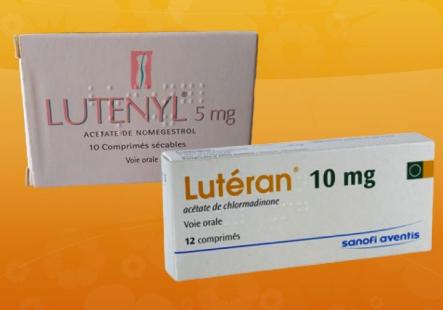
- After the Androcur, other progestogen pills (Luteran and Lotényl) are the subject of an ANSM alert because they increase the risk of brain tumor.
- A limited risk that should not panic patients, but invite them to reassess with their doctor the benefit/risk balance. The ANSM gives them the floor via a call to contributions.
- Pour mieux comprendre la situation, 20 Minutes a interrogé Isabelle Yoldjian, cheffe du pôle gynécologie de l’ANSM.
Quelle pilule contraceptive prendre ? Le choix se restreint au fur et à mesure que les alertes de l’Agence nationale de sécurité du médicament (ANSM) se multiplient. Après le scandale autour de Diane 35, les nouvelles recommandations sur l’Androcur, ce sont maintenant deux pilules progestatives, Lutéran et Lutényl, qui sont dans le viseur de l’ANSM.
En juin 2020, elle publiait une mise en garde concernant ces deux traitements et leurs génériques, qui augmentent le risque de méningiome, une tumeur du cerveau bénigne dans la plupart des cas. Une alerte basée sur une étude épidémiologique menée sur plus de 3 millions de patientes par Epi-Phar. En cette rentrée, l ’agence lance un appel à contributions jusqu’au 30 septembre pour que toutes les femmes qui suivent ces traitements puissent faire remonter leur expérience et leurs inquiétudes. Pour mieux comprendre cette alerte et l’intérêt de cette consultation, 20 Minutes a interrogé Isabelle Yoldjian, cheffe du pôle gynécologie de l’ANSM.
What are the risks for women who are under Lutéran or Lotényl and their generics?
The investigation into Androcur updated an over-risk of meningioma, it was therefore logical to take an interest in the little brothers, two other macro -rogestatives. A vast epidemiological study revealed in early June an over-risk to develop a meningioma for a woman treated by Lotéran and Lotényl. With a dose effect: the more the treatment of a high dose is taken, the greater the risk. Clearly, a woman who takes these treatments more than six months is at risk approximately 3.3 times more to develop this disease than a woman who does not take it. From the age of five, the risk is multiplied by 12.5 for Lotényl, and by 7 for 3.5 years under Lutéran.
What to panic ... what about the many women who have been taking this treatment for years?
Developing a meningioma, a benic brain tumor, is not systematic. But it is important to know this risk to make sure to limit it. Women who have taken treatment for many years should check that they have no neurological symptoms. If this is the case, or if they are over 35 years old and have been taking these drugs for over five years, health professionals must offer them to make brain imaging.
A priori, there is no risk of stopping this treatment. On the other hand, if a woman finds herself relieved in case of endometriosis, she can decide to continue him after discussion with her doctor. This is why each patient is invited to reassess the benefit/risk with her doctor.
The ANSM has appealed to contributions. For what purpose, when you had already published recommendations ?
The results of the epidemiological study were known in early June. It was important to put in place immediate measures to limit this risk. But we did not look at the therapeutic indications. These calls for contributions will enrich the public consultation, which will take place on November 2. To discuss women, patient associations and health professionals to find out what the indications for which Lutéran and Lotényl remain appropriate with regard to the risk of meningioma. Before taking measures, we had to make sure that all aspects were bordered and that we were going to take into account all the issues. Last week, we received around forty contributions. It's a lot. For the only other call for contributions launched by the ANSM, we had a whole hundred.
What will be the next steps?
At the end of this public consultation, the ANSM will publish precise recommendations for women and doctors in order to know how to use these treatments. These drugs have very varied indications: contraception, rules of rules, endometriosis, breast pain, previous disorders the rules, fibroid, pre-menopause ... perhaps some are no longer justified. More broadly, the ANSM pursues a vigilance on the progestogy pills. Because there are others, as well as progestin -based IUDs. From the moment we are interested in a product, we investigate the whole family ...
Precisely, you had launched the same approach for the Androcur. With what consequences?
For Androcur, we reached what we wanted. We knew that there was an over-risk of meningioma since it was written in the notice for ten years. What was not known was the quantification of the over-risk: after x years, the risk is multiplied by Y. and at what dose. We discovered that from six months, the risk was multiplied by 7. We obtained a considerable drop in the use of Androcur, since there were 90,000 patients treated before ANSM communications in September 2018 to 11,000 in 2020. That is to say a drop in prescription of around 80 %. Before the alert, France represented 60 % of the consumption of Androcur in Europe!
Androcur, Lotéran and Lotényl are progestins. Why not have alerted directly to these three treatments? Haven't we waste time?
We couldn't do everything at the same time, it was far too large. Between 500,000 and 600,000 women take luteran or lutenyl or their generics. Furthermore, the problem does not fall as much from the out -of -marketing authorization (AMM) as anderocur. For the latter, we had an overuse for moderate acne or hirsutism, while it is normally prescribed in severe hirsutism linked to the syndrome of polycystic ovaries. From contraception to menopause, a woman will easily use one or another lutenyl or luteran. Finally, there was no pharmacovigilance signal on Lotéran and Lotényl before February 2019. A 2016 study revealed less than ten cases of pharmacovigilance. All the communication around Androcur has certainly released on other pills.
Luteran has not been marketed since this September in France ... Is this alert still useful?
Yes, because Luteran does not occupy the priority market share. Lutenyl, and especially the generics of these two drugs, are much more used. This is why we mention in our press releases the molecules, nomestrol (lutenyl and generic) acetate) and chlormadinone (luteran) acetate.
These three treatments are supposed to relieve women with endometriosis. What alternatives will they have?
Ces deux molécules ne font pas partie des recommandations de la Haute Autorité de santé en cas d’endométriose. On sait que ces traitements sont utilisés, mais il n’y a pas d’essai clinique qui prouve leur efficacité. Le traitement médical de première intention, c’est une pilule de 2e génération en continu pour éviter d’avoir ses règles. Ou le stérilet Mirena.
More and more alerts concern contraceptives. Is access to contraception slowed down?
C’est un sujet. Il existe une inquiétude des professionnels de santé sur un discrédit des hormones en général, pas seulement pendant la contraception. On doit avoir ces discussions globales avec les patientes en ayant à l’esprit que ce genre d’alerte risque d’entraîner un report vers des pilules qui peuvent provoquer des troubles thrombo-emboliques veineux.
Lien de l’article ici